
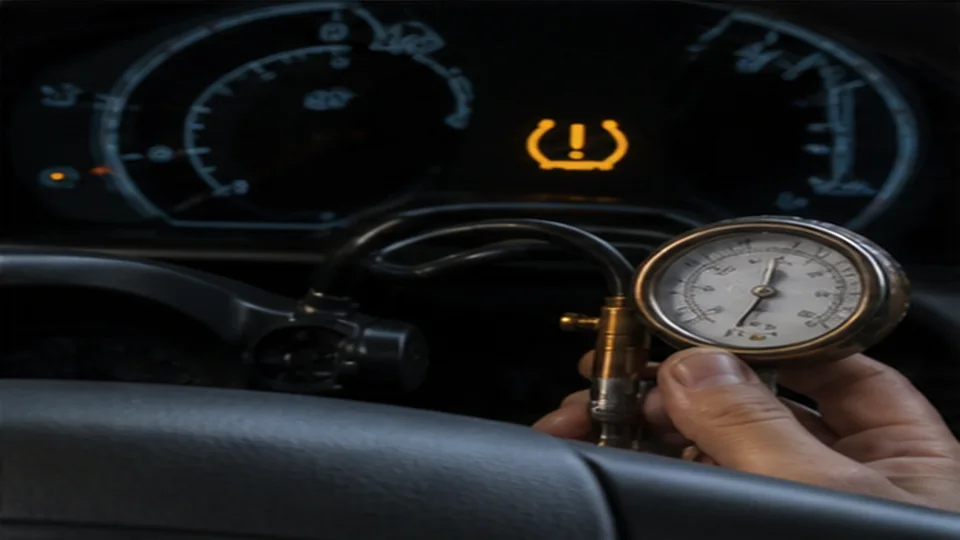
A pressure warning can follow normal temperature change, but it can also signal a puncture, valve leak or tire damage that needs inspection.
Check the vehicle safely
Park on a level surface away from traffic and inspect for a visibly low tire, embedded object or sidewall damage. Do not continue driving on a tire that is severely underinflated or visibly deformed.
Use the recommended pressure
Use the cold inflation pressure on the driver's door-jamb placard or owner's information, not the maximum number moulded into the tire sidewall. Front and rear recommendations may differ.
A recurring warning needs investigation
If pressure drops again after inflation, the assembly may have a puncture, valve issue, bead leak or wheel concern. Repeatedly adding air does not correct the cause.
Reset only after correction
Some monitoring systems update after driving while others have a reset process. Correct the pressure or underlying fault first, then follow the vehicle instructions.
What to send Tire Help
- Your exact address or live map pin
- Vehicle year, make, model and tire size
- Clear photos of the tire and surrounding area when safe
- Whether the vehicle has a spare and wheel-lock key
- Any parking, garage or roadside access details